ESOP 2026 III Asteroid-Moons




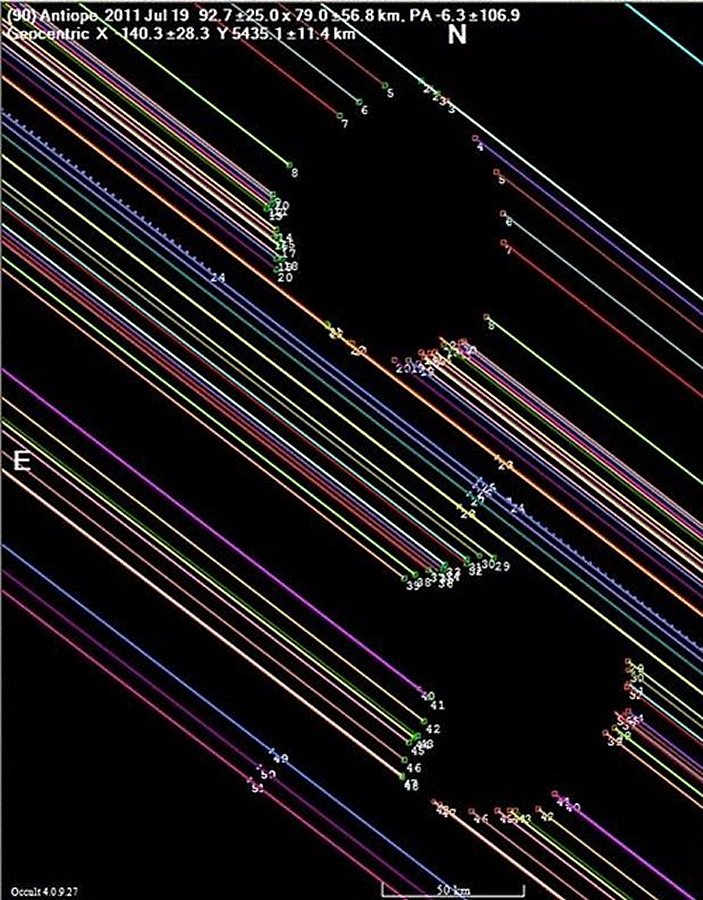
The first attempt involved Antiope.
Known from stellar occultation
observations to be a close binary system, the asteroid consists of two
celestial bodies of nearly equal size.
The Sternberg institute expected a minimum at 18, Feb 2025 near 20:40
UT.....
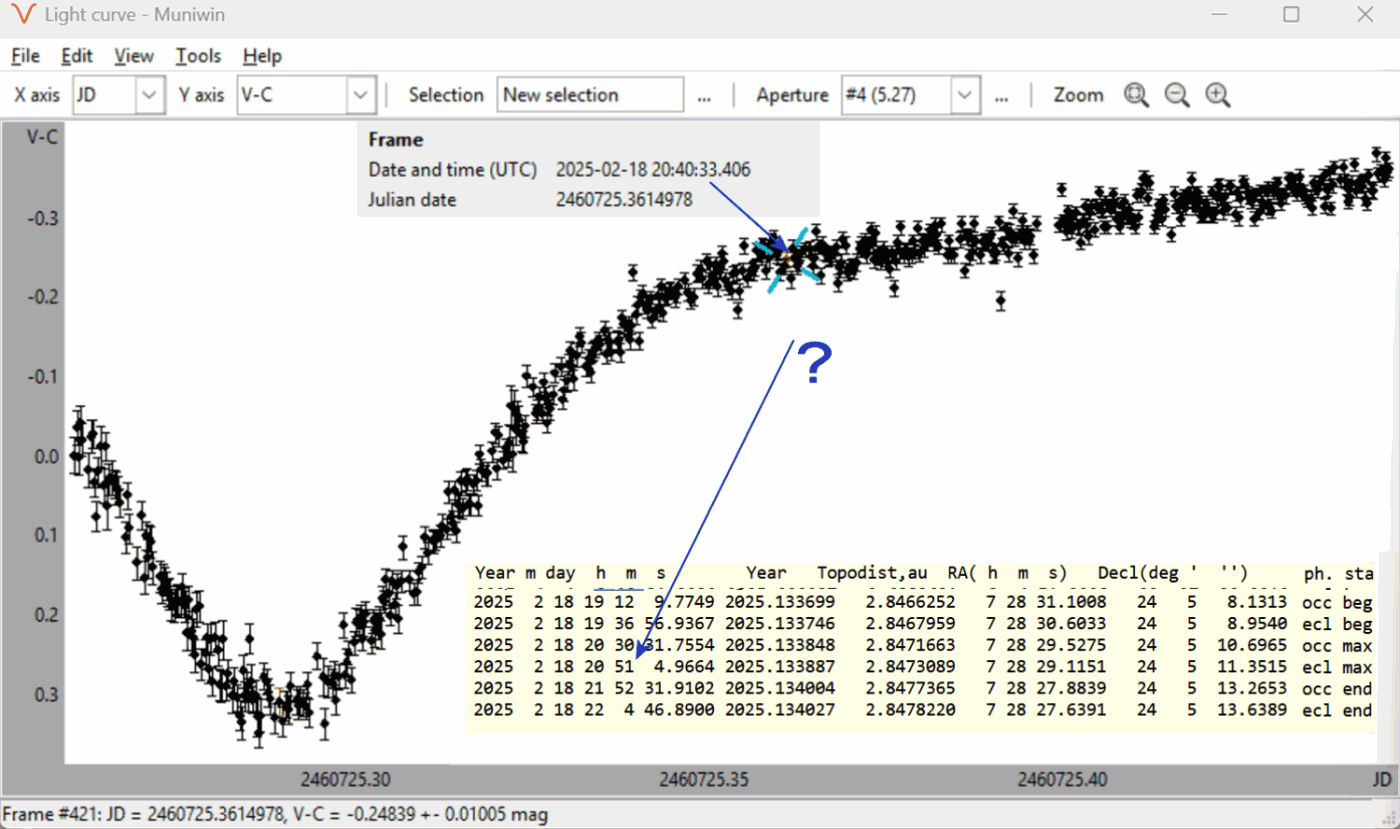
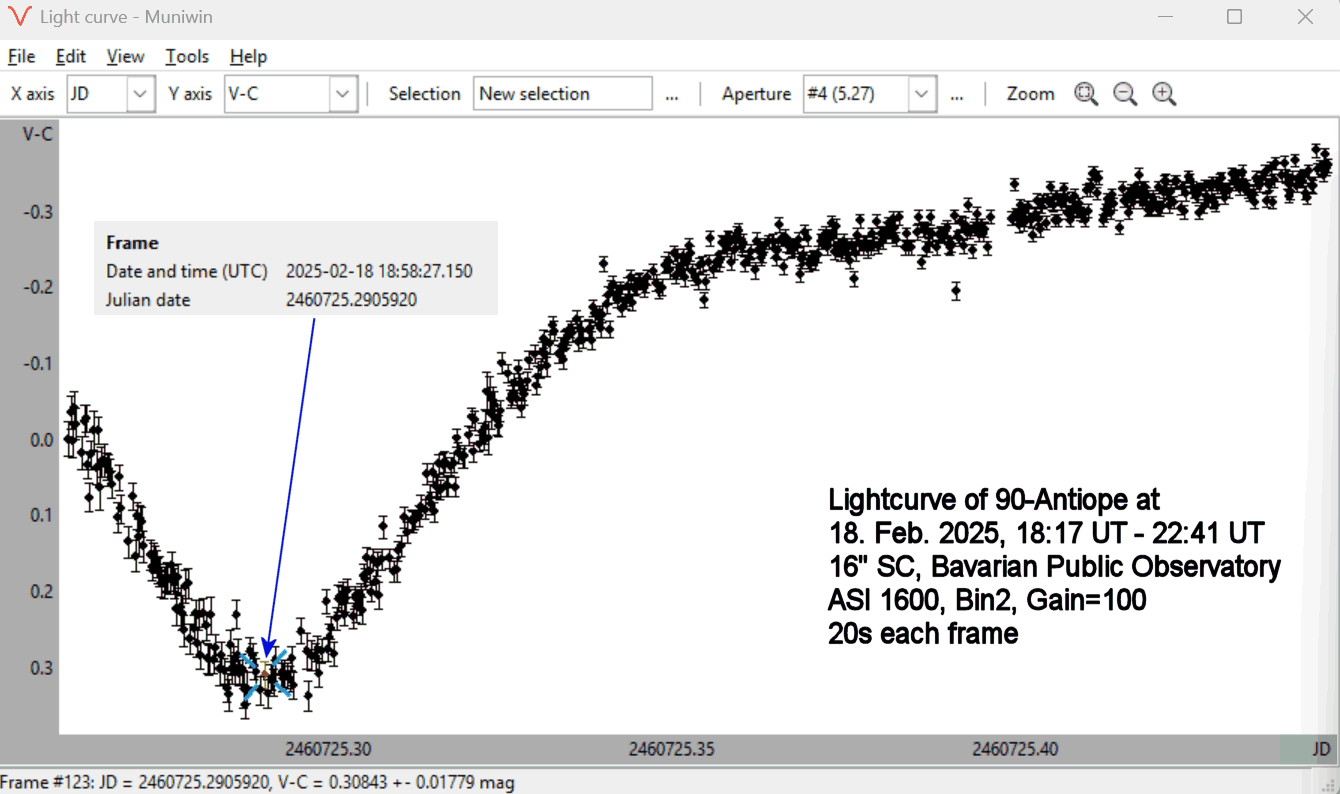
....but the ephemerid was wrong! The real minimum was at 18:58 UT...so
it was 1 hour and 42 minutes earlier than expected.
The second attempt
war at 5. March 2025.

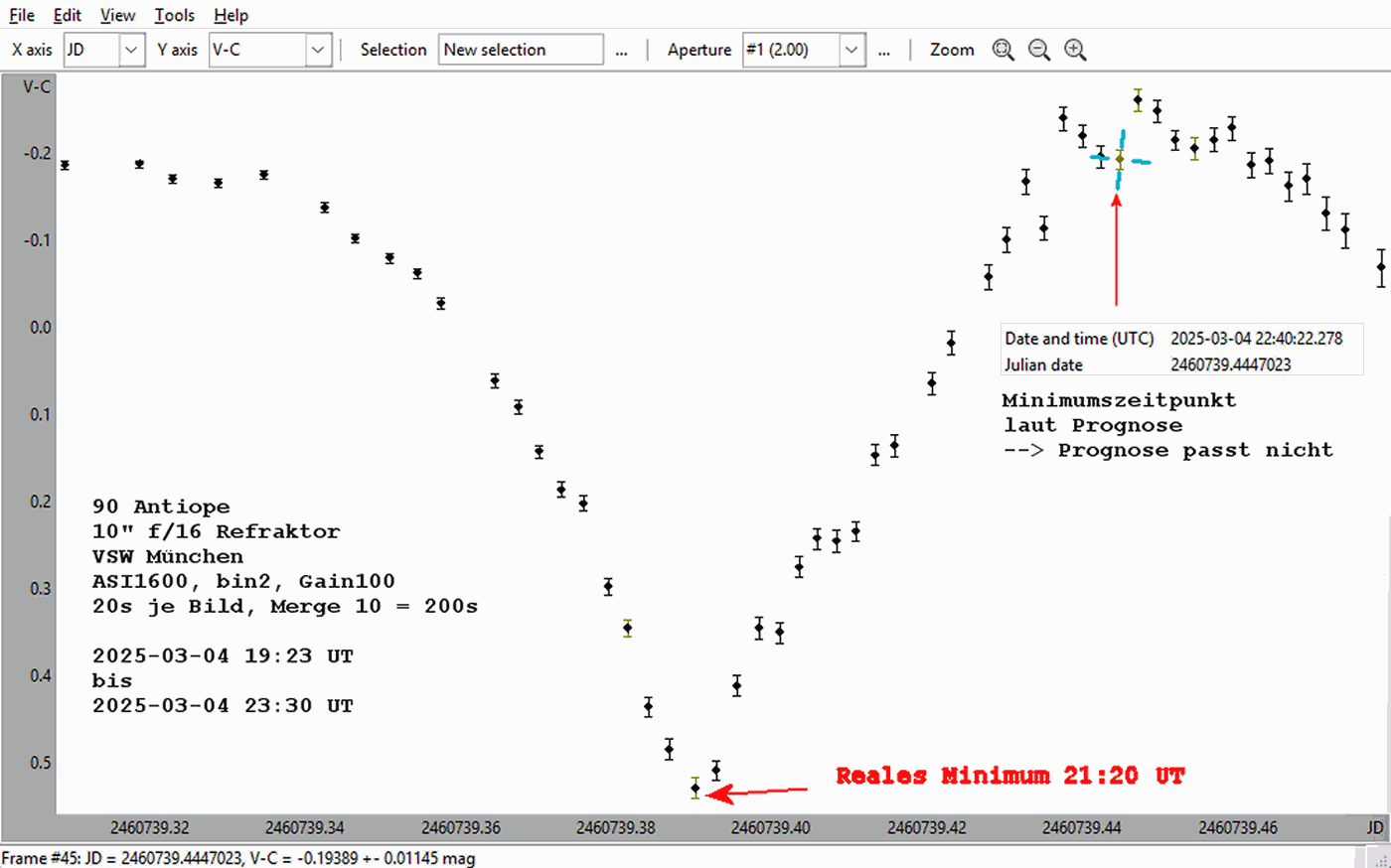
Again the minimum was 1 hour and 20 minutes earlier than expected - but
this time the light curve was complete.
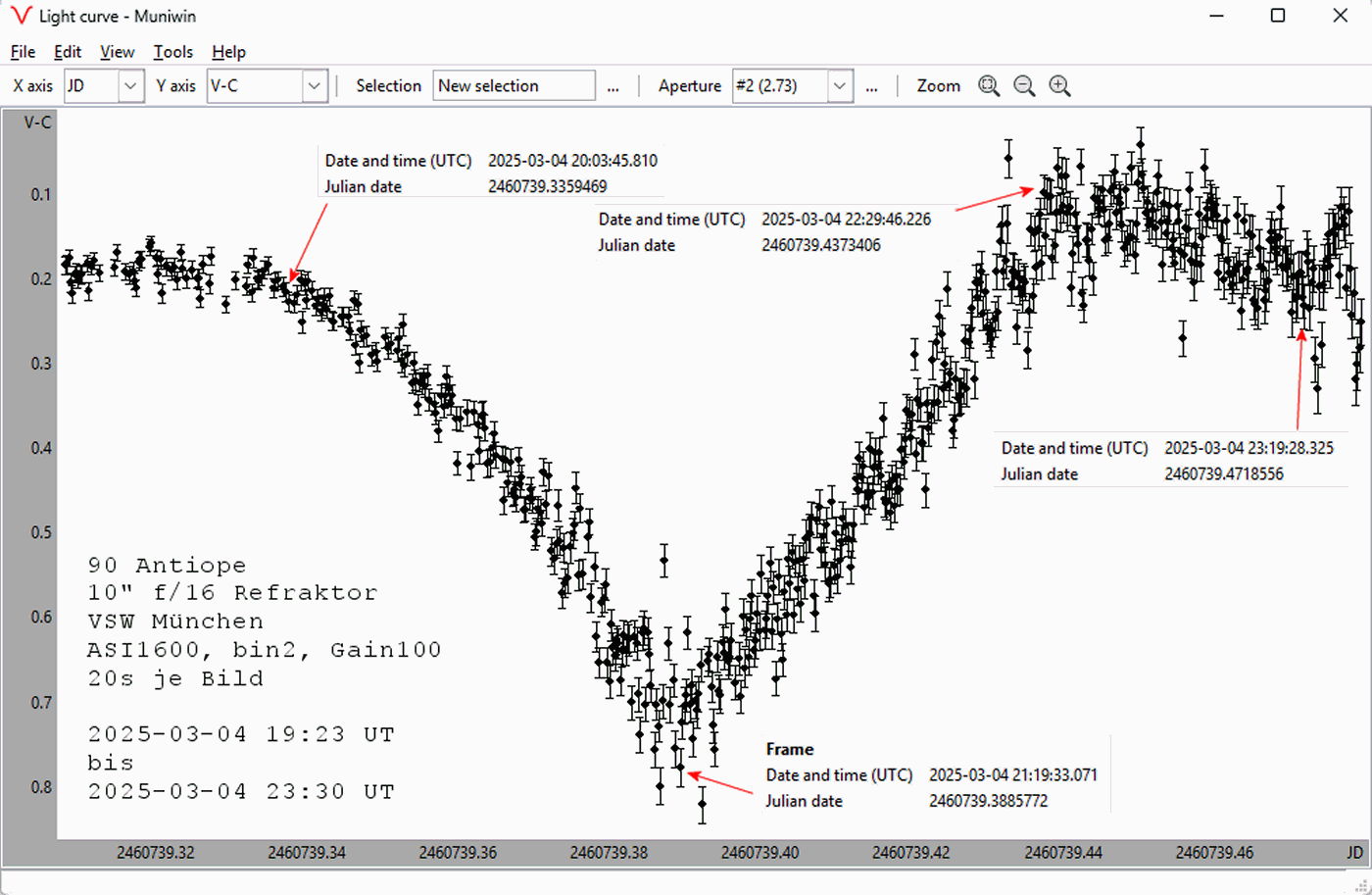
A difference in slope is visible on the right and left
side. This could be attributed to the offset between the eclipse and
the occultation, but it could also be explained by the shapes of the
bodies. Thisr is more likely if you compare the curves from March and
February. The curves are mirror images of each other, which could be
due to A eclipsing B in one instance and B eclipsing A in the other.
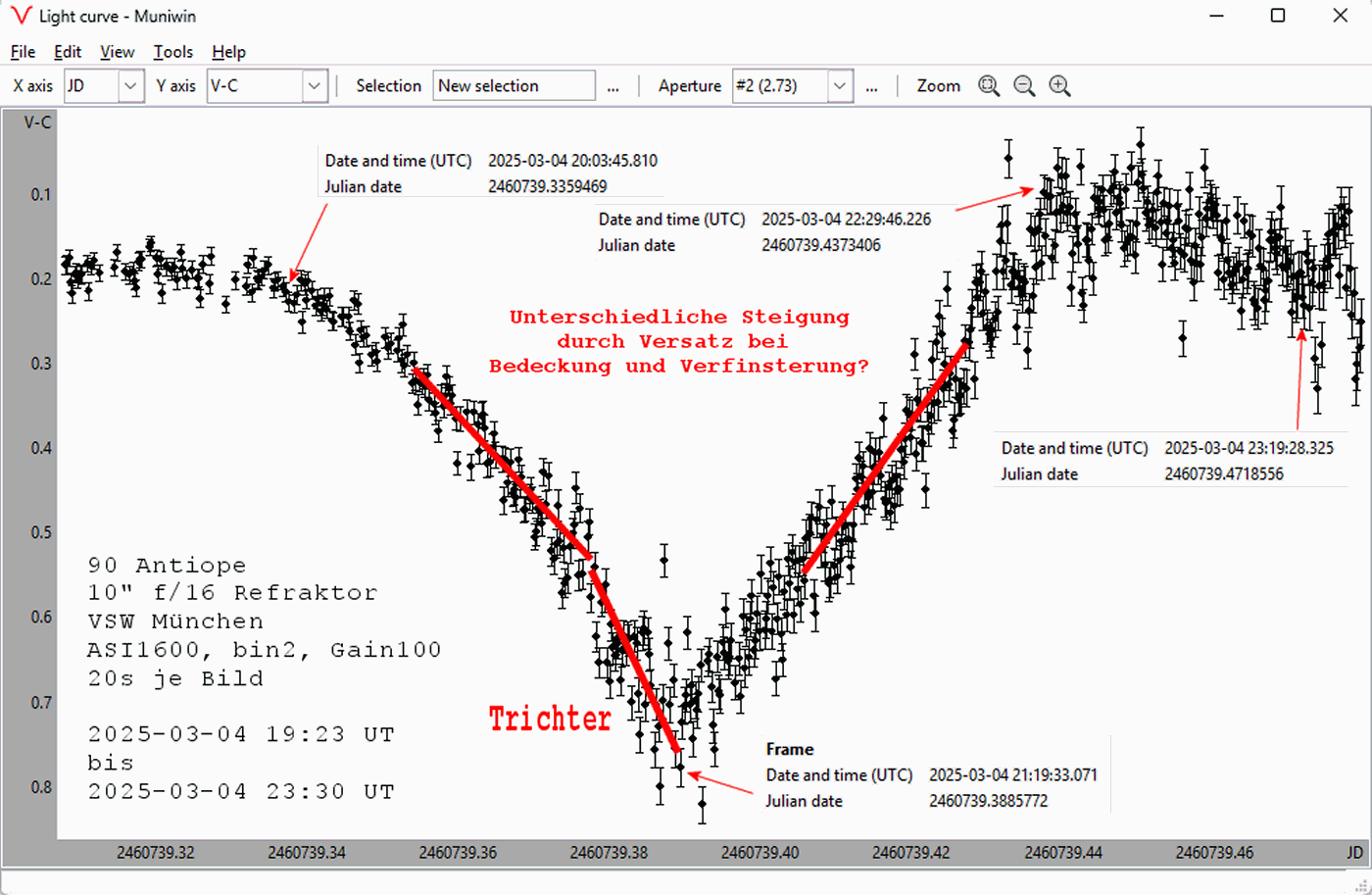
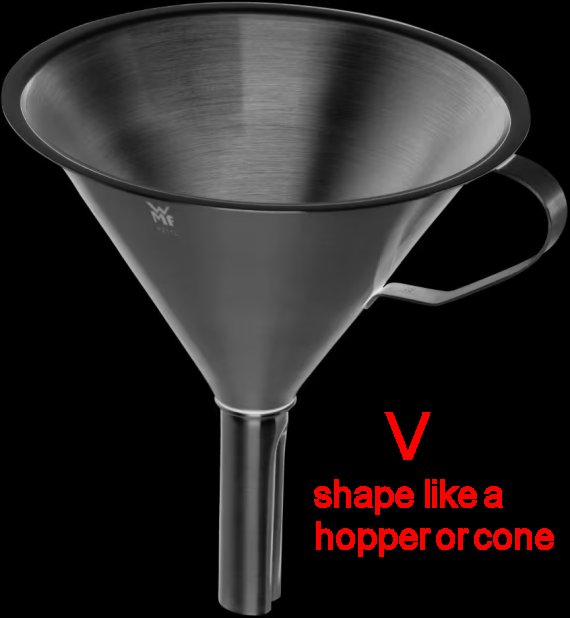
The V-shaped hopper is visible...but difficult to see

Hauptseite